Custom publishing system
Create reusable blocks, templates, content types, roles, previews, and editorial guardrails around how the organization publishes.
Engineering service · Bangladesh and worldwide
Binnash provides custom WordPress and WooCommerce engineering for organizations that need more than a template assembly. Work can include themes, plugins, editorial systems, commerce, integrations, migrations, performance, security hardening, deployment, and maintainable workflows for the team operating the site across Bangladesh and global markets.
By Nazmul Alam · Reviewed
01
This service fits organizations that need editorial ownership, structured content, custom presentation, WooCommerce, integrations, or reusable publishing behavior without adopting the cost of a fully custom application. The project should be driven by content and operating requirements, not by installing the largest possible plugin stack.
Create reusable blocks, templates, content types, roles, previews, and editorial guardrails around how the organization publishes.
Connect products, checkout, payments, orders, operations, and content when WordPress is the right commerce foundation.
Build maintainable behavior that belongs in code instead of fragile page-builder configuration or unrelated plugins.
Move content and URLs, replace unsafe customizations, improve performance, and establish controlled updates without assuming a redesign.
02
A maintainable WordPress system gives editors useful control while keeping layout, data, permissions, and business behavior within intentional boundaries. Binnash defines what belongs in content, a block, a theme, a plugin, WooCommerce, or an external service.
Deliverables can include content discovery, information architecture, product UX, custom blocks, block patterns, themes, plugins, content types, taxonomies, editorial roles, WooCommerce customization, integrations, imports, migrations, performance work, security hardening, automated checks, deployment, documentation, and handover.
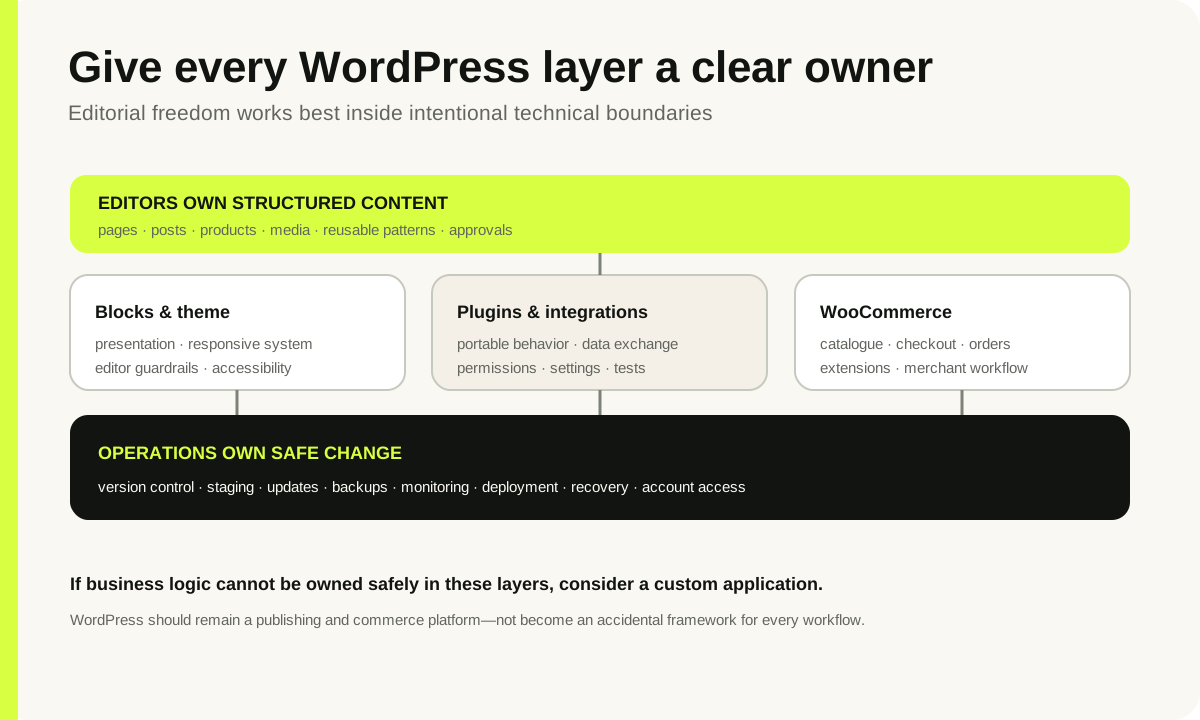
Structured content, custom fields, blocks, patterns, templates, preview, permissions, and publishing guidance for real editors.
Plugins or integrations for workflows that should remain portable and testable instead of being coupled to visual configuration.
Products, checkout, payments, orders, emails, extensions, fulfilment connections, and operator workflows in WooCommerce.
Hosting fit, deployment, backups, updates, monitoring, access, documentation, and a recovery path appropriate to the site.
03
Not every requirement needs custom code, and not every plugin is a safe shortcut. Binnash weighs fit, ownership, update behavior, data portability, performance, and long-term operating effort before choosing an implementation level.
| Implementation level | Use it for | Ownership question |
|---|---|---|
| Configured WordPress | Standard publishing with a carefully selected theme and plugins | Can the team operate within existing capabilities? |
| Custom blocks and theme | Distinct design system and structured editorial experience | Will editors retain useful control without layout drift? |
| Custom plugin | Portable business behavior, integrations, or workflows | Does the behavior need tests, versioning, and independence from presentation? |
| WooCommerce customization | Commerce that fits WordPress content and operating needs | Can extensions and custom behavior be updated safely together? |
| Custom application | Workflow and domain complexity that no longer fits publishing-led architecture | Would WordPress become a container for application logic it should not own? |
04
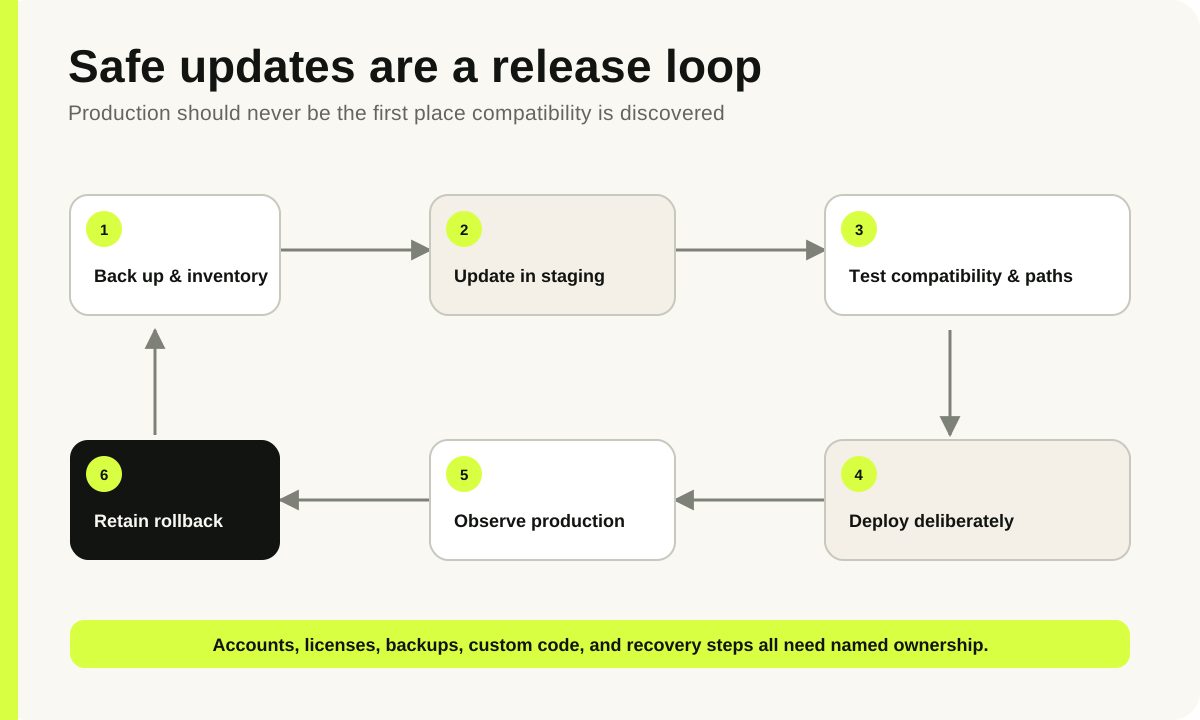
The site is tested with the people who publish, merchandise, approve, and maintain it. Front-end polish is important, but the editor experience, content integrity, update path, and recovery plan determine whether the implementation lasts.
05
WordPress quality depends on controlled dependencies and operations as much as front-end code. Binnash reduces unnecessary plugins, keeps custom responsibilities clear, and makes the update and recovery process visible.
Select themes, plugins, and extensions for real requirements; record licenses, ownership, update history, compatibility, and replacement risk.
Use WordPress APIs, least-privilege roles, validated and escaped data, controlled administration, secure secrets, backups, updates, and monitoring.
Measure representative templates and real-user Core Web Vitals where available; address media, fonts, scripts, queries, caching, and hosting based on evidence.
Keep code in version control, document custom behavior, preserve exports and backups, and ensure the client controls accounts, domains, data, and necessary licenses.
06
A custom publishing site is commonly planned over 2–5 weeks. Custom blocks, themes, or plugins are commonly planned over 5–10 weeks, while a WooCommerce or integration-heavy build can require 8–16+ weeks. Content readiness, design, custom behavior, extensions, migration, integrations, performance, and editorial review determine the schedule.
Indicative Binnash WordPress ranges begin around $1,000–$3,000 (BDT 1.5–4 lakh) for a custom publishing site. Custom blocks, themes, plugins, WooCommerce, migrations, and integrations use higher planning tiers. These are planning ranges, not fixed quotations or Bangladesh market averages.
Engineering can include discovery, necessary product UX, implementation, scope-appropriate testing, deployment, documentation, handover, and 90 days of defect correction and launch stabilization. Paid licenses, hosting, content, photography, copywriting, taxes, and ongoing maintenance remain separate.
See the WordPress and WooCommerce development guide for detailed implementation levels, planning tiers, and exclusions.
07
A useful brief includes the people operating the site as well as the desired front end. Existing sites should include enough access and evidence to understand dependencies, content, URLs, performance, and update risk.
For a commerce-first project with broader operational integration, compare ecommerce engineering . If workflow complexity suggests a custom application, review Laravel SaaS engineering before extending WordPress beyond its best role.
Sources
External facts and conversion guidance should be checked against these primary sources at decision time.
FAQ
Only when a builder is the most maintainable fit for the real editorial and design requirements. Custom blocks and patterns often provide stronger guardrails and portability for structured publishing. The decision considers editor capability, layout freedom, performance, dependency risk, and long-term ownership.
Yes. A custom plugin is appropriate when business behavior, integration, content logic, or workflow should remain portable and version-controlled rather than live inside a theme or manual configuration. The scope can include settings, permissions, data migration, tests, documentation, and update behavior.
Potentially, after reviewing backups, hosting, PHP and WordPress versions, theme and plugin dependencies, custom code, licenses, data, and critical paths. Older sites may need a staged compatibility audit and test environment before production updates. No update is treated as risk-free without evidence and recovery.
Yes. Binnash measures representative templates, server timing, database behavior, media, fonts, scripts, plugins, caching, and third-party services before recommending changes. Performance goals should reflect real users and Core Web Vitals where field data exists, not only a single laboratory score.
Ownership and renewal responsibility are recorded in the proposal and handover. Client-owned licenses are preferred where practical because they preserve direct access to updates and support. Any agency, bundled, or non-transferable license must be disclosed rather than hidden inside the build.
A defined build includes 90 days of defect correction and launch stabilization, not indefinite maintenance. Ongoing updates, compatibility testing, backups, monitoring, security response, content support, and feature development can be scoped separately with explicit responsibilities and response expectations.
Start with context
Share the current stage, constraint, timeline, and approved budget band. The senior team will reply with the right next step.