New commerce build
Launch a focused Shopify, WooCommerce, or custom commerce experience with an explicit catalogue, checkout, payment, and operating model.
Engineering service · Bangladesh and worldwide
Binnash engineers ecommerce systems for catalogue scale, customer speed, operational clarity, and reliable integration. Work can include storefronts, product data, search, checkout, payments, inventory and fulfilment connections, analytics, performance, migration, and the internal tools required to run commerce day to day.
By Nazmul Alam · Reviewed
01
This service fits when the buying experience and the operating workflow must be designed together. The storefront is only one part of commerce; catalogue ownership, payment outcomes, inventory, fulfilment, returns, support, analytics, and reconciliation determine whether the system remains usable after launch.
Launch a focused Shopify, WooCommerce, or custom commerce experience with an explicit catalogue, checkout, payment, and operating model.
Improve customer journeys while planning catalogue, URL, content, order, customer, analytics, and integration continuity.
Connect commerce with inventory, fulfilment, ERP, CRM, support, reporting, or marketplace workflows.
Diagnose measured friction across discovery, product detail, cart, checkout, payments, mobile performance, and operational failure.
02
Binnash maps the full order lifecycle before committing to a platform or implementation boundary. The scope distinguishes customer experience from merchant operations and identifies which system owns each important piece of data.
Deliverables can include commerce discovery, platform selection, product UX, information architecture, catalogue modeling, storefront implementation, search and filtering, cart and checkout, local or international payments, promotions, inventory and fulfilment connections, migration, analytics, performance, testing, deployment, documentation, and handover.
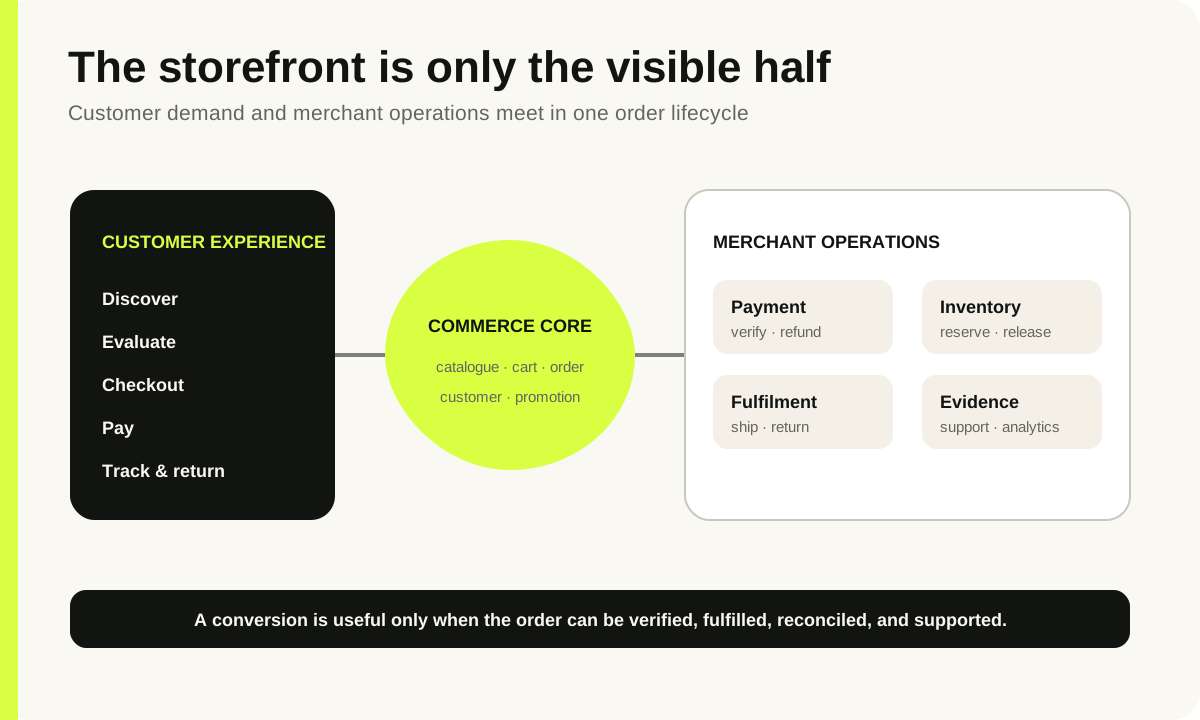
Discovery, category and product detail, search, cart, checkout, account, order status, returns, and support paths.
Products, pricing, promotions, inventory, order review, fulfilment, refunds, content, roles, and reporting.
Payments, webhooks, ERP or inventory, couriers, CRM, messaging, analytics, feeds, and reconciliation.
Performance budgets, critical-path tests, redirects, analytics validation, access, monitoring, launch plan, and rollback expectations.
03
Platform selection should minimize the amount of unique software the business must own while preserving the workflows that create real advantage. Binnash evaluates catalogue, checkout, payments, integrations, content, extension economics, team capability, and the expected rate of change.
| Direction | Strongest fit | Watch carefully |
|---|---|---|
| Shopify | Standard commerce with managed platform operations and a mature app ecosystem | Subscription and app costs, checkout constraints, data and integration fit |
| WooCommerce | Content-led commerce requiring WordPress flexibility and direct implementation control | Plugin interaction, updates, hosting, performance, security ownership |
| Custom commerce application | Distinct workflows or integration depth that platforms cannot support responsibly | Higher build and operating responsibility, payment and compliance boundaries |
| Headless implementation | A justified experience layer shared across channels or complex front-end needs | Preview, caching, content operations, integration and deployment complexity |
04
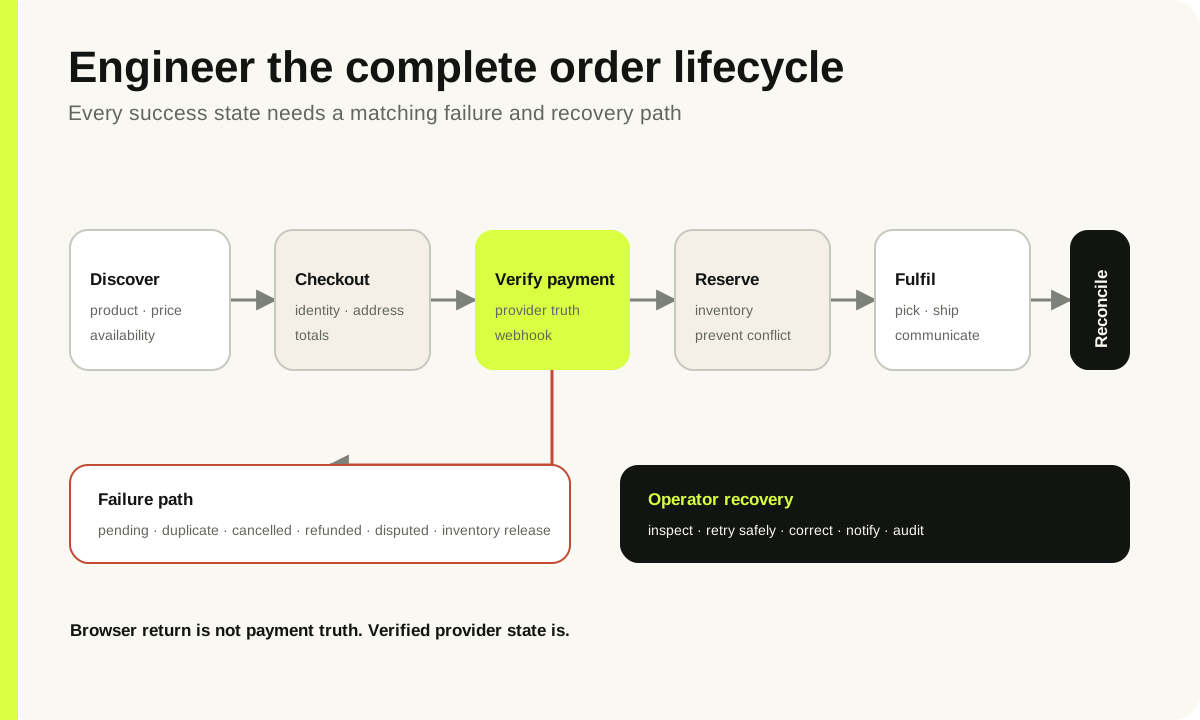
The process prioritizes the paths that affect whether a customer can buy and whether the team can fulfil, reconcile, and support the order. Broader experience work follows once those boundaries are understood.
05
For Bangladesh commerce, payment availability is only the first decision. The implementation must distinguish browser return from server-side confirmation, verify signatures or provider status, handle delayed and duplicate notifications, and give operators a way to reconcile uncertain orders.
bKash, SSLCOMMERZ, cards, cash on delivery, courier workflows, and international payment needs can create different order states and settlement responsibilities. Provider approval, fees, reserve rules, onboarding, transaction limits, and settlement terms belong to the merchant and provider; Binnash scopes the software integration and operational controls.
Treat verified provider status and server-side events as authoritative; make pending, failed, cancelled, refunded, and disputed states visible.
Define where stock is authoritative, when it is reserved, how failed orders release it, and how channels reconcile differences.
Clarify shipment creation, courier status, partial fulfilment, return-to-origin, cancellations, and customer communication.
Document consent, event definitions, payment attribution, campaign parameters, and server-versus-browser reporting limitations.
06
A defined Shopify or WooCommerce commerce build is commonly planned over 3–6 weeks. Custom commerce is commonly planned over 8–16 weeks, while an integration-heavy platform can require 4–8+ months. Catalogue complexity, checkout, payments, migration, operations, integrations, content readiness, traffic, and release constraints determine the schedule.
Indicative Binnash ecommerce ranges begin around $1,500–$4,000 (BDT 2–5 lakh) for a defined Shopify or WooCommerce build. Custom workflows, broader migration, and operational integrations use higher planning tiers. These are planning ranges, not fixed quotations or Bangladesh market averages.
Engineering can include discovery, necessary product UX, implementation, scope-appropriate testing, deployment, documentation, handover, and 90 days of defect correction and launch stabilization. Platform subscriptions, apps, gateway charges, hosting, content, photography, fulfilment, taxes, and unlisted migration work remain separate.
See the ecommerce development guide for Bangladesh for detailed planning tiers and a platform decision framework.
07
A responsible estimate needs a picture of both demand and operations. Share current evidence where possible instead of treating catalogue size or a page count as the complete scope.
If WordPress ownership and editorial flexibility are central, compare WordPress and WooCommerce engineering . If the business model itself is still being tested, begin with MVP product development .
Sources
External facts and conversion guidance should be checked against these primary sources at decision time.
FAQ
Yes. The recommendation considers catalogue, checkout, payments, content, extensions, integrations, migration, traffic, team capability, ownership, and total operating responsibility. The goal is the least complex platform that supports the real workflow, not a predetermined technology choice.
Binnash can scope integrations with supported providers such as bKash or SSLCOMMERZ. Merchant onboarding, eligibility, contractual terms, fees, limits, reserves, and settlement remain between the business and provider. The software scope covers payment initiation, verified outcomes, webhooks, order states, failure handling, and reconciliation needs.
Migration can preserve important URL, metadata, content, product, and analytics signals when they are inventoried and mapped. Redirects, canonical behavior, crawl controls, structured data, feeds, and post-launch monitoring should be planned. No supplier can guarantee unchanged rankings after a major platform or information-architecture change.
Yes, after measuring the problem across real pages, devices, templates, scripts, images, server behavior, and third-party apps. The engagement should connect Core Web Vitals and technical bottlenecks to customer and operating impact instead of promising a score without understanding platform constraints.
Not by default. Binnash can design the content model, import path, templates, validation, and editorial workflow. Photography, brand work, copywriting, translation, and bulk catalogue entry remain separate unless a proposal explicitly includes them.
A defined build includes 90 days of defect correction and launch stabilization. Ongoing maintenance, feature delivery, platform updates, monitoring, and operational support can be scoped separately. The proposal states response expectations and which systems remain the client’s operational responsibility.
Start with context
Share the current stage, constraint, timeline, and approved budget band. The senior team will reply with the right next step.