Founder-led new product
Turn domain knowledge, customer conversations, or a commercial hypothesis into a release that can be used and evaluated.
Engineering service · Bangladesh and worldwide
Binnash helps founders turn a product thesis into the smallest credible release that can test real behavior. The engagement combines product framing, design, engineering, deployment, analytics, and a learning plan—keeping the first release focused without creating a technical dead end.
By Nazmul Alam · Reviewed
01
This service fits when a team has a product thesis and needs the smallest credible release that can produce evidence from real use. The work is not a race to ship every requested feature; it is a disciplined choice about which behavior, customer, workflow, and metric the first release must test.
Turn domain knowledge, customer conversations, or a commercial hypothesis into a release that can be used and evaluated.
Replace a manual or fragmented process with a focused product slice before committing to broader transformation.
Test a new audience, capability, integration, or business model without destabilizing the existing product.
Move beyond a clickable demo or proof of concept into secure, measurable software that a defined user group can operate.
02
The first useful artifact is a clear chain from product thesis to observable evidence. Binnash helps turn assumptions into a release boundary and records what is intentionally deferred so focus does not become accidental incompleteness.
Deliverables can include problem framing, customer and workflow definition, assumption mapping, scope and decision log, product UX, interface design, application engineering, integrations, analytics events, deployment, operational tools, launch readiness, documentation, handover, and a prioritized post-release plan.
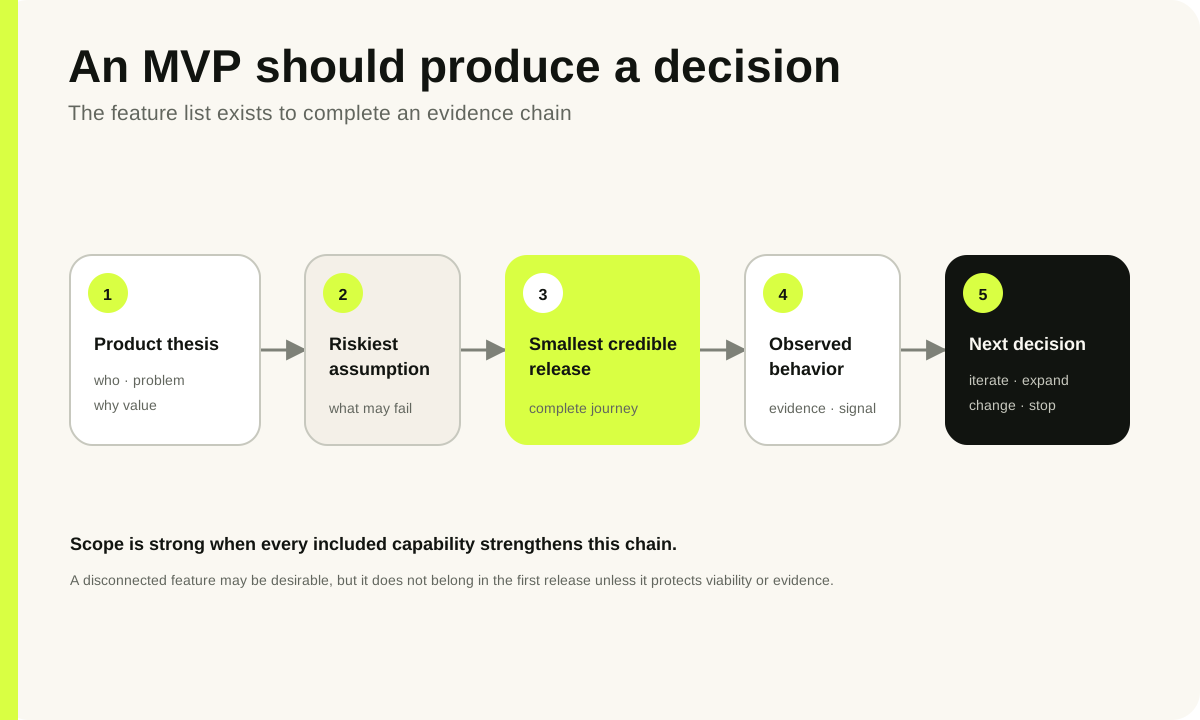
State who has the problem, what behavior should change, why the product may create value, and what would disprove the belief.
Choose the minimum complete journey, user group, operating model, and quality bar that can test the thesis responsibly.
Define activation, task completion, retention, conversion, qualitative feedback, or operational metrics before instrumentation.
Agree what evidence supports iteration, expansion, repositioning, a deeper technical investment, or stopping.
03
The release should be thin across the full product and deep enough in the core journey. Binnash avoids a collection of disconnected screens that cannot be operated, measured, or trusted by the intended user.
| Concern | Validation build | Production MVP |
|---|---|---|
| Purpose | Test a risky interaction or technical assumption | Test real behavior in a usable product and operating model |
| Users | Internal team or controlled reviewers | Defined external or internal users with real responsibilities |
| Data and security | Representative or constrained data with explicit limitations | Appropriate identity, permissions, data handling, backup, and recovery |
| Operations | Manual support may be acceptable and documented | Administration, failure handling, monitoring, support, and ownership are explicit |
| Measurement | Qualitative evidence and focused prototype events | Defined product analytics plus user and operator feedback |
| Handover | Decision artifact and prototype limitations | Code, accounts, documentation, deployment, and prioritized product path |
04
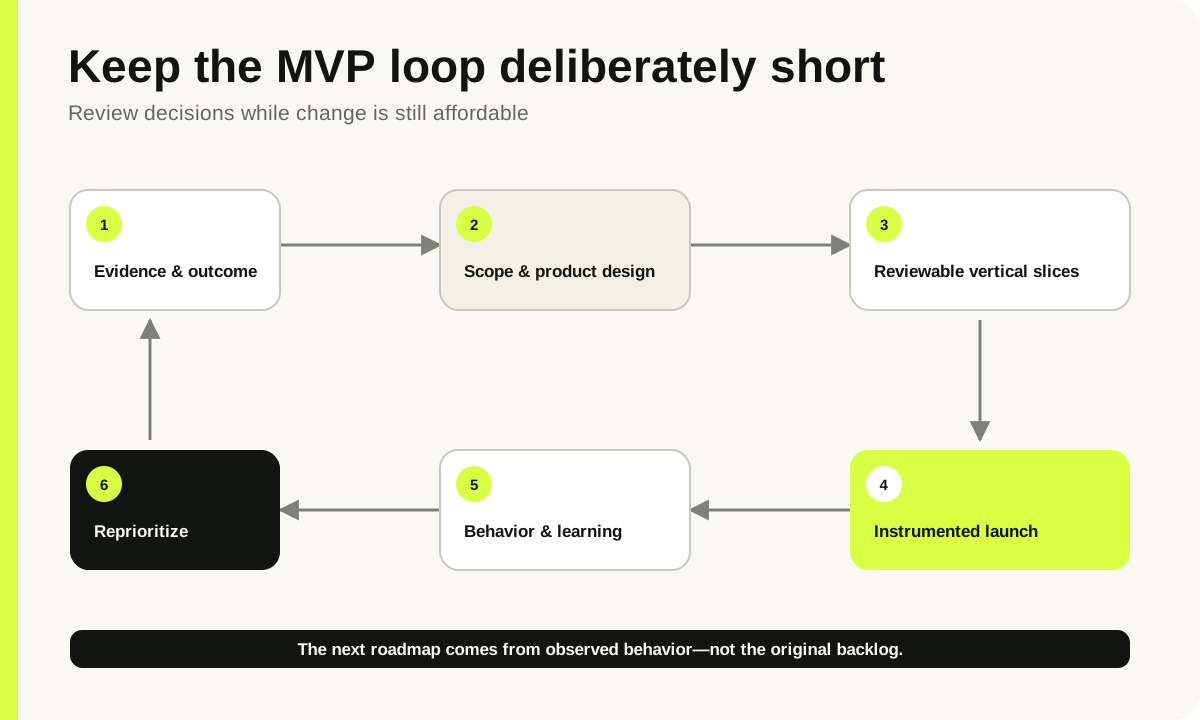
Product strategy, design, and engineering move together in short review cycles. The team addresses decisions when they can still change the release cheaply and keeps the build anchored to the evidence the product must create.
05
A first release should avoid speculative scale, but it still needs enough structure to change safely if the thesis works. Binnash distinguishes reversible shortcuts from decisions that could trap data, identity, billing, integrations, or product ownership.
Choose architecture for the first credible operating load and near-term product path rather than an imagined global platform.
Be deliberate about identity, permissions, tenancy, payments, data ownership, integrations, and migration because they become costly to unwind.
Keep product rules, analytics definitions, configuration, and important workflows understandable enough to evolve after evidence arrives.
Use client-accessible repositories and accounts, documented deployment, monitoring, backups, and a handover path appropriate to the release.
06
A validation build is commonly planned over 3–6 weeks. A production MVP often fits an 8–16 week window, while a growth platform can require several staged months. Workflows, integrations, data, security, operations, design readiness, stakeholder availability, and release constraints determine the actual schedule.
Indicative Binnash ranges are about $1,500–$4,000 (BDT 2–5 lakh) for a validation build and $4,000–$12,000 (BDT 5–15 lakh) for a production MVP. A production MVP includes more than screens: real users, appropriate security, analytics, operations, deployment, and handover. These are planning ranges, not fixed quotations or Bangladesh market averages.
The range can include discovery, necessary product UX, engineering, scope-appropriate testing, deployment, documentation, handover, and 90 days of defect correction and launch stabilization. Taxes, licenses, hosting, model or API use, payment fees, brand work, content, photography, and unlisted migration remain separate.
Use the software development cost guide to compare Validation Build, Production MVP, and Growth Platform assumptions.
07
You do not need a finished specification. The most useful context shows what has been learned, what remains uncertain, and what commercial or operating constraint the first release must respect.
If model behavior is the primary uncertainty, compare AI product engineering . If the application domain and long-term workflow are already defined, review Laravel SaaS engineering . Use the software-company hiring guide when comparing delivery partners.
Sources
External facts and conversion guidance should be checked against these primary sources at decision time.
FAQ
Binnash starts with the product thesis, target user, risky assumptions, operating model, and next decision. A feature belongs when it is necessary to complete the smallest credible journey, protect the intended user, operate the release, or measure the evidence. Everything else is challenged or deferred explicitly.
Yes, if the founder can provide product context and participate in discovery decisions. The engagement may begin with paid discovery to define the user, workflow, assumptions, release boundary, architecture direction, milestones, and evidence plan before a build estimate is responsible.
It can validate comprehension, interaction, or a sales conversation, but it is not automatically a production MVP. A product used in a real workflow may also need identity, permissions, data, integrations, operations, analytics, deployment, support, and recovery. The artifact should be named according to the decision it can genuinely support.
The team reviews product analytics, user feedback, operator evidence, support issues, technical behavior, and the original decision criteria. The next step may be iteration, focused growth work, a new segment, operational hardening, repositioning, or stopping. Binnash can scope a follow-on milestone or hand over the prioritized plan.
The standard model is paid scoped or milestone delivery, or a monthly product-engineering engagement. Any alternative commercial arrangement would require explicit owner approval and separate terms; it should not be assumed from the service page or project brief.
Ownership, pre-existing intellectual property, third-party licenses, repositories, production accounts, domains, data, and credentials are stated in the proposal and handover. Binnash favors client-accessible systems and does not make product ownership depend on hidden credentials or an undocumented deployment process.
Start with context
Share the current stage, constraint, timeline, and approved budget band. The senior team will reply with the right next step.